Bending Toward Vending: South Carolina Looking To Modernize The Way It Sells Tickets
Palmetto State is last holdout among legal lottery jurisdictions, but bill permitting machine sales is advancing

2 min
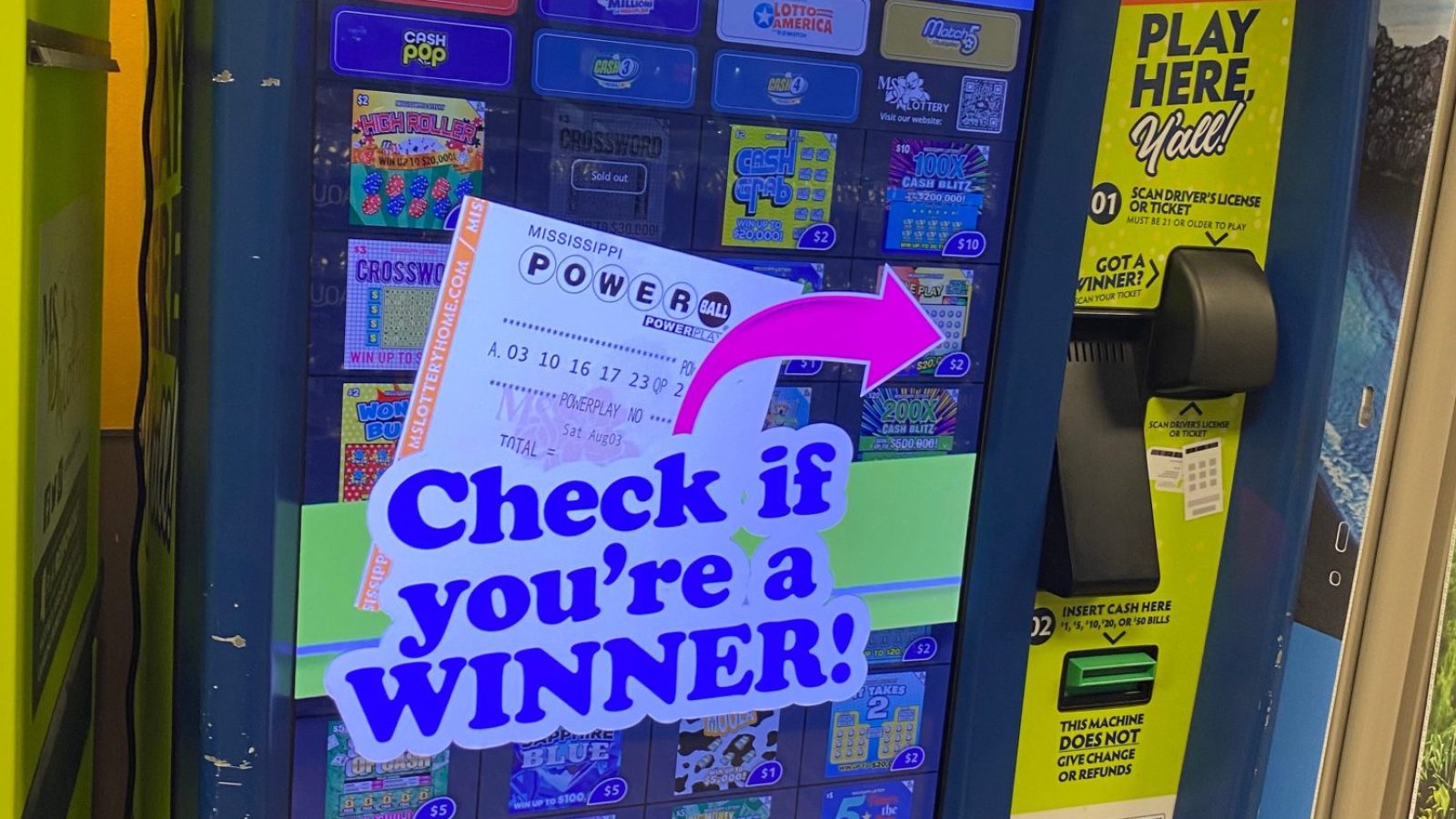
There is only one state in the nation that allows lottery play but doesn’t allow tickets to be sold out of vending machines. And there is momentum toward reducing that number to zero.
After Nebraska Gov. Jim Pillen signed off in February on legislation to permit vending machine lottery sales in the Cornhusker State, that left South Carolina as the lone holdout requiring customers to purchase their tickets from a human behind a counter.
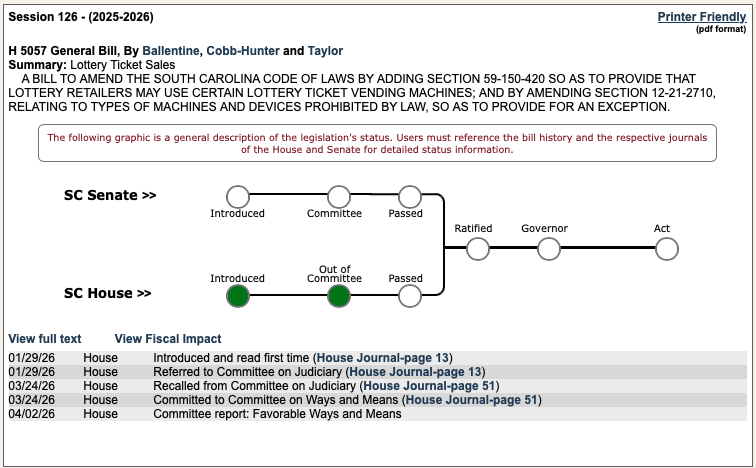
With HB 5057 now making its way through the legislature, however, South Carolina may follow Nebraska’s lead before the General Assembly adjourns for 2026.
The bill, which was introduced on Jan. 29, adds the following language to Chapter 150, Title 59 of the S.C. Code:
Notwithstanding any other provision of law, the commission shall permit a lottery retailer to sell lottery tickets through lottery ticket vending machines. The lottery ticket vending machines also may distribute prizes up to the amount the lottery retailer is authorized to distribute. Lottery ticket vending machines must require ID verification before purchase. The provisions of this chapter are applicable to the use of lottery ticket vending machines. For purposes of this section, “lottery ticket vending machine” means a self-service, automated kiosk that allows the purchase of lottery tickets.
On April 1, the House Ways and Means Committee voted 16-4 in favor of advancing the bill to the full House floor. If it passes in the House, it would then need Senate approval and sign-off from Gov. Henry McMaster. The General Assembly’s 2026 session is scheduled to conclude on May 7, though a legislative session in South Carolina can be extended under certain circumstances.
Cut the line
The bill is sponsored by two Republicans, Nathan Ballentine and Bill Taylor, and one Democrat, Gilda Cobb-Hunter.
“It’ll generate more money, and also it’ll free up lines in the convenience store. Yes, let’s go for that,” Ballentine told WLTX 19 last week. “I’m just trying to pay for gas, get a Coke, something like that, and there’s a ton of people in line buying lottery tickets.”
The South Carolina Education Lottery (SCEL) examined the fiscal impact of legalizing vending machine sales and concluded that a one-time expenditure of $10 million for 500 machines spread in retail locations across the state would increase gross ticket sales by somewhere between $13.7 million and $36.3 million in the first year.
By the second fiscal year after implementation, the SCEL projects an increase of between $3.4 million and $9 million in net proceeds available for appropriation.
In his interview with WLTX 19, Ballentine addressed concerns over underage customers (in South Carolina, you must be at least 18 to buy lottery tickets) being able to make purchases at the machines. He noted that a verified ID is required.
“It’ll be scanned, it’ll go to all the DMVs, so if you’re from Kentucky buying something, we’ll know, is that a legitimate Kentucky license,” Ballentine said.
Supporters of the bill assert that vending machine sales are needed to attract a younger generation of customers that is, overall, less inclined toward interpersonal engagement.
“The opportunity cost of not doing it,” SCEL CFO Anne Huffman said to members of the House in January, “is not reaching consumers who are not willing to do the traditional method of going to a clerk and purchasing lottery tickets.”