North Carolina Education Lottery Audit Shows Declining Emphasis On That Word ‘Education’
NC Lottery offers explanation for why sales increased, but contributions to public schools decreased

2 min
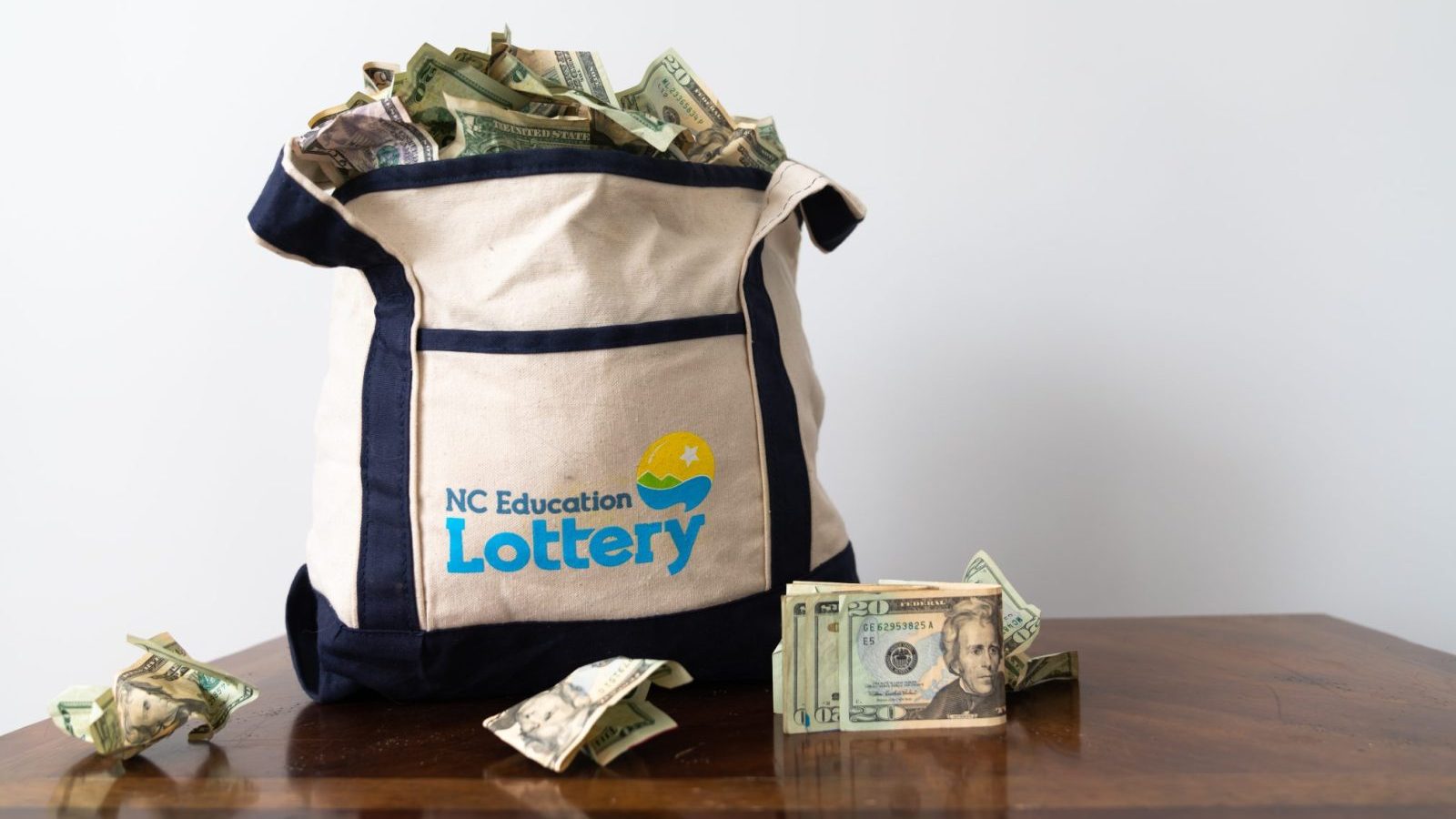
Fittingly, given the business it operates, the North Carolina Education Lottery (NCEL) cited “luck of the draw” in responding to a recent audit that revealed a decline in the amount of lottery revenue being transferred to the state’s public schools in Fiscal Year 2025.
An audit report released last Monday by a private company contracted by State Auditor Dave Boliek revealed that, from July 2024 to June 2025, the lottery produced a state record $6.59 billion in sales, up 22.5% over the $5.38 billion in sales the previous fiscal year. The audit also found, however, that the amount of money the NCEL contributed to the state for public school funding dipped by 1.9%, from $1.07 billion in FY24 to $1.05 billion in FY25.
There is currently no required percentage of lottery revenue that the NCEL must contribute to education (it was a compulsory 35% when the lottery first launched in North Carolina in 2005), and that flexibility has led to decreasing numbers in recent years. The audit found that it went from 23% in FY23 to 20% the next year and 16% in this most recent year.
But the NCEL’s response indicated there’s more to it than the top-line numbers, and that a down year for massive jackpots in national draw games Powerball and Mega Millions triggered the decline in funding for education.
“A significant percentage of lottery performance sometimes simply results from the luck of the draw,” the NCEL wrote. “Both multistate jackpot games, Powerball and Mega Millions, perform best when jackpots reach or exceed a certain level to drive sales.
“In fiscal year 2025, an unusual, almost unprecedented, number of Powerball and Mega Millions jackpots did not reach the levels needed to drive sales. Statistically, this is not expected to occur.”
Under the billion-dollar barrier
As the NCEL further explained, Powerball and Mega Millions crossed the $1 billion jackpot mark a combined five times in FY24, but only once in FY25. The top jackpot amount of FY24 was $1.7 billion, compared to a high of $1.2 billion in FY25.
FY26 has already seen two Powerball jackpots exceed $1.7 billion in the first half of the fiscal year, which both offers promise for public schools in North Carolina a year from now and underscores that FY25 was somewhat of an outlier in terms of jackpots rarely ballooning to the point where high sales numbers were triggered.
Boliek released a statement last week that did not cut the NCEL much slack.
“North Carolinians have a reasonable expectation that if the Education Lottery’s ticket sales go up, money going toward our public schools would increase as well,” Boliek said. “At first glance, these numbers raise a lot of questions. Over the last three years, total revenues have increased by a total of over $3 billion, while contributions to public education have been flat.”
The NCEL further explained that although sales were up, the form those sales took shifted in FY25.
Sales of Powerball and Mega Millions tickets decreased by a combined $174 million in North Carolina in FY25, and overall in-person lottery sales went down $254 million. FY25, however, was the first full year of digital instant sales in the state, and those produced $2.6 billion of the nearly $6.6 billion in total lottery sales.
Different games produce different levels of revenue, the NCEL explained:
“Digital instant games like their retail instant win equivalent, scratch-offs, have higher payouts than draw games due to the nature of game play. The NCEL’s game portfolio features a wide range of payouts based on the value proposition of each game with digital instant games providing the highest prize payout.”
The NCEL ultimately tried to put a positive spin on the declining public education contribution numbers.
“The introduction of digital instants is a strategic business decision to ensure the sustainability of the lottery over time,” the NCEL wrote. “If not for this new way of playing lottery games, the lottery would be unlikely to sustain its record of increasing sales every year or its ability to raise more than $1 billion a year for the good cause it serves.”